English
 Views: 0 Author: SLVCN Engineering Team Publish Time: 2026-08-24 Origin: Site


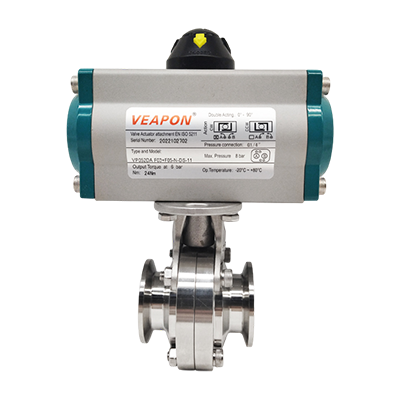
When selecting an automated valve for an industrial pipeline system, many engineers and buyers compare pneumatic butterfly valves and pneumatic ball valves.
Both valves use quarter-turn operation and can be equipped with pneumatic actuators for automatic on/off control. However, their different designs make them suitable for different applications.
The correct valve selection depends on several factors, including:
A pneumatic ball valve is often selected when reliable isolation and shutoff performance are the main priorities, while a pneumatic butterfly valve is often preferred for large diameter pipelines where compact design, lower weight and cost efficiency are important.
Quick Comparison: Pneumatic Butterfly Valve vs Pneumatic Ball Valve
Feature | Pneumatic Ball Valve | Pneumatic Butterfly Valve |
Closing Element | Rotating ball with a bore | Rotating disc inside the valve body |
Main Advantage | Reliable shutoff and isolation | Compact structure and large-size efficiency |
Flow Path | Straight-through flow path when fully open | Disc remains inside the flow path |
Best For | Critical isolation applications | Large diameter flow control systems |
Typical Applications | Oil, gas, chemical and process systems | Water treatment, HVAC, cooling water and utility systems |
There is no universally better valve. The correct selection depends on the actual operating conditions and application requirements.
Key Difference Between Pneumatic Ball Valve and Pneumatic Butterfly Valve
Both pneumatic ball valves and pneumatic butterfly valves are quarter-turn valves, meaning the actuator rotates the valve element approximately 90 degrees between open and closed positions.
A pneumatic ball valve uses a rotating ball with a flow passage through the center. When fully open, the passage aligns with the pipeline, creating a relatively direct flow path.
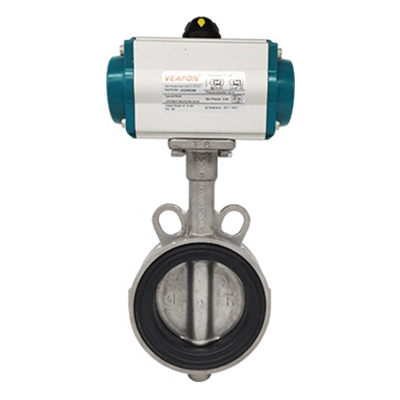
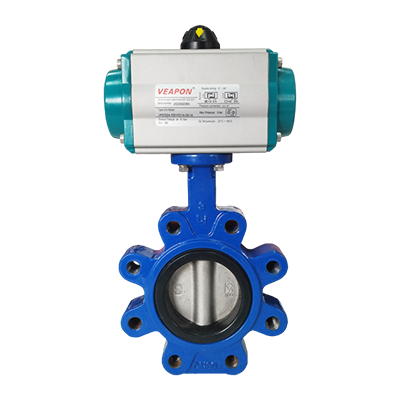
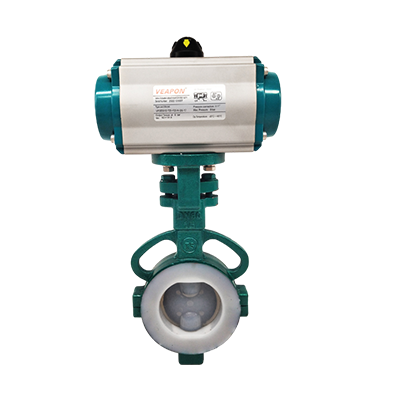
A pneumatic butterfly valve uses a rotating disc mounted on a shaft. The disc controls flow by changing its position inside the pipeline.
Because of these different designs, ball valves and butterfly valves provide different advantages in industrial applications
When Should You Choose a Pneumatic Ball Valve?
A pneumatic ball valve is often selected when reliable isolation and shutoff performance are important.
Critical Isolation Requirements
Ball valves are commonly used in applications where preventing unwanted leakage is a major consideration.
|
|
|
|
Typical applications include:
When fully open, many ball valves provide a relatively unobstructed flow passage.
This can help reduce pressure loss and makes ball valves suitable for applications where flow efficiency is important.
Important or Hazardous Media
For valuable, hazardous or sensitive process media, dependable shutoff performance is often a key selection factor. However, the final valve choice should always consider pressure, temperature, medium compatibility and seat material.
When Should You Choose a Pneumatic Butterfly Valve?
A pneumatic butterfly valve is often selected when pipeline size, installation space and cost efficiency are important factors.
|
|
|
|
Large Diameter Pipeline Advantage
As pipeline size increases, the size and weight of a ball valve can increase significantly because of its larger spherical ball design.
A butterfly valve uses a rotating disc instead, allowing a more compact and lightweight structure.
For large diameter applications such as:
pneumatic butterfly valves are often a practical solution.
Compact Installation
Butterfly valves usually have a shorter face-to-face dimension and lower weight compared with many other valve designs.
This can simplify installation and reduce support requirements.
Cost Efficiency
For large sizes, butterfly valves often provide advantages in:
Is a Large Diameter Pipeline Always Better for a Butterfly Valve?-Not necessarily.
Although butterfly valves have clear advantages in large diameter applications, valve selection should not be based on size alone.
For example, large pipelines transporting:
may still require ball valves.
In these applications, shutoff performance, safety requirements and operational reliability may be more important than initial equipment cost.
The best valve choice depends on the complete process requirements.
How to Select Between a Pneumatic Ball Valve and Pneumatic Butterfly Valve?
Selection Factor | Consider Pneumatic Ball Valve When | Consider Pneumatic Butterfly Valve When |
Shutoff Requirement | Reliable isolation and lower leakage risk are priorities | General isolation and flow control are required |
Pipeline Size | Small and medium sizes are common | Large diameter pipelines require compact design |
Process Medium | Gas, oil, chemical or critical process media | Water, air, utility and general industrial services |
Installation Space | Space is available | Compact installation is important |
Cost Consideration | Performance and reliability are the main priorities | Weight reduction and cost efficiency are important |
The final valve selection should also consider:
Choosing between a pneumatic butterfly valve and a pneumatic ball valve does not need to be complicated.
Provide your basic application information:
If you are not sure which valve type is suitable, that is also fine. SLVCN engineers can review your operating conditions and recommend a suitable valve, actuator and accessory configuration.
We supply:
for industrial applications including chemical processing, water treatment, oil and gas, HVAC and general automation systems.