English
 Views: 17 Author: Site Editor Publish Time: 2026-01-22 Origin: Site


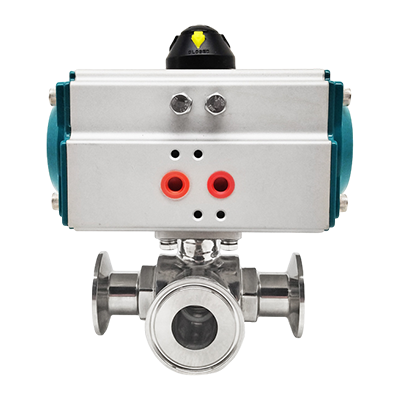
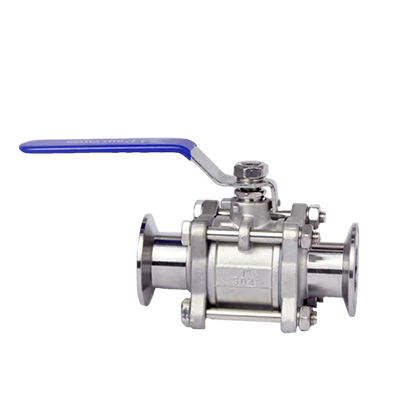
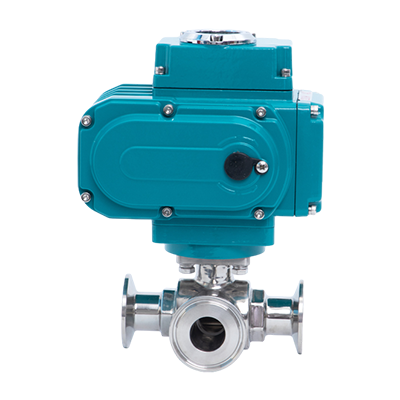
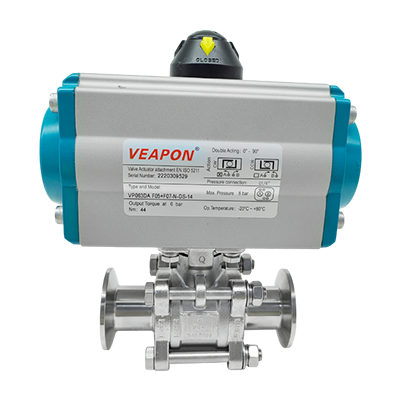
 A clamp ball valve, also commonly referred to as a sanitary ball valve, is a type of ball valve designed with a clamp (tri-clamp) connection, allowing quick installation and easy dismantling without welding or flanged bolting. It is widely used in sanitary stainless steel valve systems where cleanliness, efficiency, and frequent maintenance are required.
Compared with conventional threaded, flanged, or welded ball valves, clamp ball valves offer a compact structure and flexible connection, making them especially suitable for hygienic and maintenance-sensitive applications such as food processing, pharmaceutical production, and biotechnology systems.
The working principle of a clamp ball valve is the same as that of a standard ball valve. A spherical ball with a through bore rotates 90 degrees to control the flow:
·Open position: the bore aligns with the pipeline, allowing fluid to pass freely
·Closed position: the ball rotates perpendicular to the pipeline, stopping the flow
Thanks to the clamp connection, the valve can be removed quickly from the pipeline without damaging adjacent piping, significantly reducing downtime during cleaning or maintenance. This feature makes clamp ball valves highly suitable for sanitary valve systems requiring regular CIP or manual cleaning.
From a structural perspective, clamp ball valves are mainly classified into full-encapsulated and semi-encapsulated designs. This classification is practical and widely accepted in real sanitary and industrial applications.
Full-encapsulated clamp ball valves feature a fully enclosed valve body, minimizing external gaps and dead zones. The smooth outer surface supports effective wash-down and reduces the risk of contamination.
They are commonly used in food & beverage, pharmaceutical, and biotechnology systems, where hygienic design and easy cleaning are critical.
* Designed for sanitary applications with high cleanliness requirements.
Semi-encapsulated clamp ball valves adopt a more industrial-oriented structure, offering simpler construction and cost efficiency while maintaining reliable sealing performance.
They are suitable for general industrial fluids, water treatment, and chemical auxiliary pipelines, where hygiene requirements are moderate but easy maintenance is still valued.
* A practical and economical solution for industrial clamp-connected pipelines.
Note:
The choice between full-encapsulated and semi-encapsulated designs depends on application requirements rather than product quality.
Ball valves can be connected to pipelines through threaded, flanged, welded, or clamp connections, each designed for different system requirements.
Threaded ball valves are compact and economical but are limited in size and durability under frequent disassembly. Flanged ball valves provide strong and rigid connections, making them suitable for high-pressure or large-diameter pipelines, though they require more installation space and longer installation time. Welded ball valves offer permanent and leak-resistant joints but lack flexibility once installed.
Compared with these traditional connection types, clamp ball valves and sanitary ball valves stand out for their quick installation, easy dismantling, and stable sealing performance after repeated use. The clamp connection allows valves to be removed without damaging pipelines, making them especially suitable for sanitary stainless steel valve systems that require frequent cleaning, inspection, or replacement.
Clamp ball valves, as an important category of sanitary stainless steel valves, are not intended to replace all conventional ball valves. Instead, they provide an optimized solution for systems that value hygiene, efficiency, and ease of maintenance. With clear structural classifications and flexible connection advantages, clamp ball valves play an essential role in modern sanitary and industrial pipeline systems.