English
 Views: 0 Author: SLVCN Engineering Team Publish Time: 2026-09-21 Origin: Site


Fluoropolymer-lined valves are widely used in corrosive chemical service because the lining helps isolate the process medium from metallic wetted surfaces. However, choosing a lined ball valve or lined butterfly valve is not simply a matter of selecting any fluoropolymer lining.
PTFE, PFA and FEP, also known as F46 in China, all offer strong chemical resistance, but they differ in temperature capability, processing characteristics and suitability for different service conditions.
For most applications, the right choice should be based on the medium and concentration, operating temperature, pressure, permeation risk and valve design.
A fully lined valve is designed to isolate the process medium from metallic wetted surfaces by using a corrosion-resistant fluoropolymer lining and compatible sealing materials.
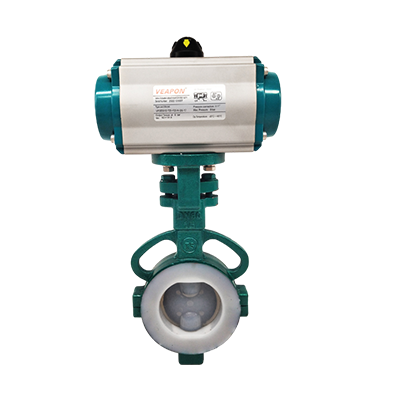
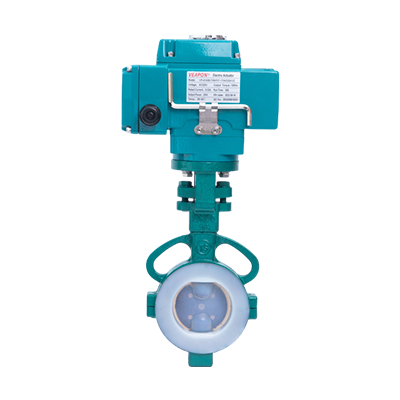
For a fully lined ball valve, the body flow passage and other wetted internal surfaces are protected by fluoropolymer lining. The ball and other wetted components are also lined or encapsulated with a compatible fluoropolymer, while the seats and sealing components are selected according to the actual service conditions.
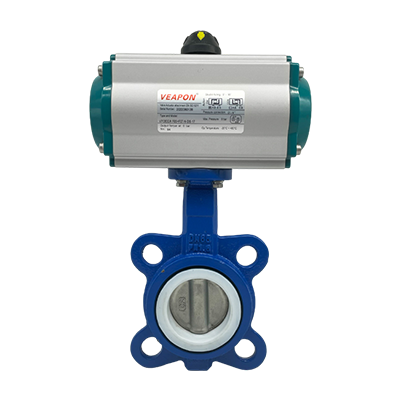
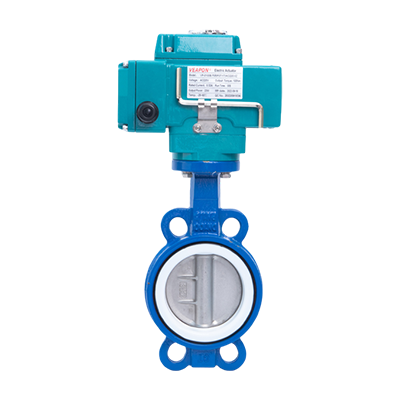
For a lined butterfly valve, the body bore is lined and the disc may also be fully encapsulated with fluoropolymer material. The stem sealing design should also prevent corrosive media from reaching exposed metal parts.
This is different from a PTFE seated butterfly valve. If only the seat is PTFE while the disc remains exposed stainless steel, the valve is not necessarily a fully lined butterfly valve.
 |  |  |  |
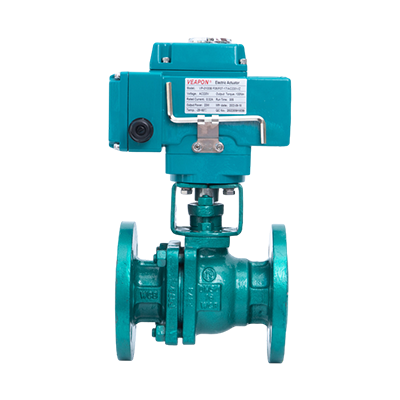
| Pneumatic Lined Flanged Ball Valve | Electric Lined Flanged Ball Valve | Electric Lined Wafer Butterfly Valve | Pneumatic Lined Wafer Butterfly Valve |
| Material | Chemical Resistance | Temperature Capability | Main Characteristics | Typical Applications |
| PTFE | Excellent | High | Broad chemical compatibility; widely used for liners and seats | General corrosive chemical service |
| PFA | Excellent | High | Melt-processable; suitable for continuous and complex molded linings | Demanding chemical, high-purity and higher-temperature service |
| FEP / F46 | Very good | Lower than PTFE/PFA | Melt-processable and suitable for uniform lining | Moderate-temperature corrosive service |
The actual allowable temperature of a lined valve depends on pressure, valve size, liner thickness and valve construction. The temperature capability of the raw lining material should not be used directly as the operating limit of the complete valve.
A PTFE lined ball valve or PTFE lined butterfly valve is often a practical choice for general corrosive chemical applications.
PTFE provides excellent resistance to a wide range of acids, alkalis and other aggressive media and is widely used for both lining and sealing components.
If the chemical compatibility, pressure and temperature are within the valve's rated range, PTFE can provide a good balance of corrosion resistance, reliability and cost.
A PFA lined ball valve or PFA lined butterfly valve is often considered for more demanding service.
PFA provides chemical resistance similar to PTFE for many media, but it is melt-processable, which makes it well suited for continuous molded linings and complex internal surfaces.
It is commonly considered for higher-temperature corrosive service, high-purity processes and applications where lining integrity or permeation risk requires closer attention.
FEP, also called F46, also offers good resistance to many corrosive chemicals and can be formed into uniform linings.
An FEP lined ball valve or FEP lined butterfly valve can be suitable for moderate-temperature corrosive service where chemical compatibility has been confirmed.
Compared with PTFE and PFA, its temperature capability is generally lower, so PTFE or PFA is normally considered first for higher-temperature applications.
The first step is to confirm the exact process medium. The chemical name alone may not be enough because concentration and temperature can significantly affect material compatibility.
Pressure and temperature should also be considered together. Even if the lining material itself can tolerate a certain temperature, the complete lined valve may have a lower allowable operating limit.
Permeation is another important factor. Some chemicals can gradually penetrate fluoropolymer linings, particularly at elevated temperatures. For these applications, the lining material, thickness and valve construction should be evaluated together.
Vacuum and abrasive service also require additional attention. Not every lined valve is suitable for vacuum conditions, and fluoropolymer linings are not automatically the best choice for highly abrasive slurry.
| Service Condition | Material / Selection Direction |
| General corrosive chemical service | PTFE |
| Higher-temperature corrosive service | PTFE or PFA |
| High-purity process | PFA |
| Higher permeation concern | Application-specific lining design |
| Moderate-temperature corrosive service | FEP (F46) |
| Vacuum or abrasive service | Application-specific selection required |
There is no single lining material that is best for every application.
For general corrosive service, PTFE is often sufficient. For higher temperatures, high-purity processes or more demanding chemical service, PFA may be more suitable. FEP can be a practical option for moderate-temperature corrosive applications.
Before selecting a chemical-resistant ball valve or lined butterfly valve, confirm the medium and concentration, operating temperature, pressure, valve size, connection type and actuation requirements.
SLVCN supplies PTFE, PFA and FEP lined ball valves and butterfly valves with manual, pneumatic and electric actuation options.
If you are unsure which lining material is suitable, send us the medium or MSDS together with the operating conditions. Our team can help confirm the appropriate valve and lining configuration.