English
 Views: 0 Author: SLVCN Engineering Team Publish Time: 2026-09-18 Origin: Site


Three-way ball valves may look almost the same from the outside, but the internal ball design can create very different flow paths. The two most common configurations are the L-port and T-port 3-way ball valve.
The difference is simple: an L-port mainly switches flow between two branches, while a T-port provides more flow-routing possibilities. Choosing the right type starts with understanding how the medium needs to move through the piping system.
 |  |  |  |
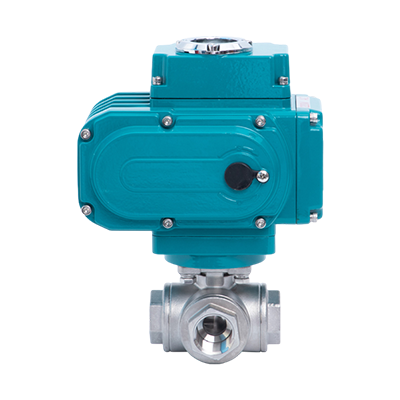
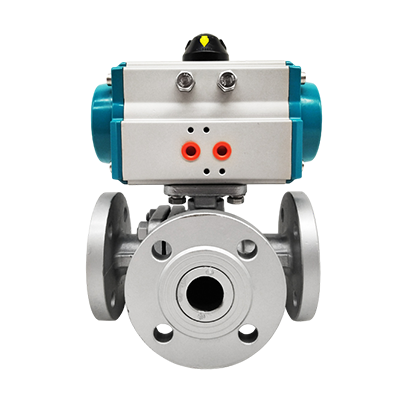
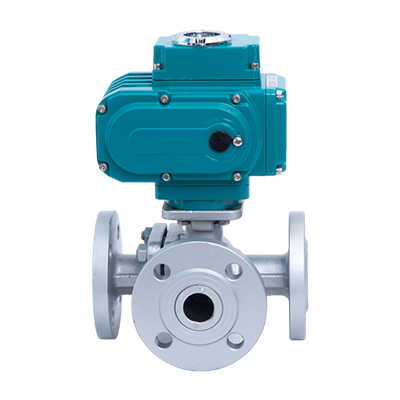
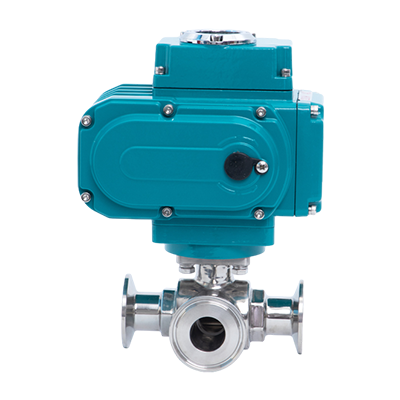
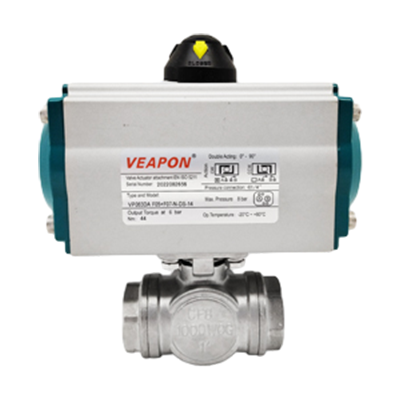
| Pneumatic 3 Way Ball Valve | 3 Way Electric Ball Valve | High Pressure 3 Way Valve | Sanitary 3 Way Ball Valve |
An L-port 3-way ball valve has an L-shaped passage through the ball. It normally connects two adjacent ports at one time, creating a 90-degree flow path.
This makes the L-port suitable for applications where one flow needs to be diverted between two pipelines. For example, one inlet can be directed to Outlet A or switched to Outlet B, while the other outlet remains isolated.
A T-port 3-way ball valve has a T-shaped internal passage and provides more flexible flow arrangements. Depending on the valve position and port orientation, it can connect two adjacent ports, provide a straight-through path between opposite ports, or connect all three ports.
| Flow Requirement | L-Port | T-Port |
| Divert flow between two branches | Yes | Yes |
| Connect two adjacent ports | Yes | Yes |
| Straight-through flow between opposite ports | No | Yes* |
| Connect all three ports | No | Yes* |
| Typical Use | Flow diversion / selection | Diversion / flow combining / multi-path routing |
*The actual flow pattern depends on the valve design, port arrangement and ball position. Always confirm the required flow diagram before ordering.
The quickest way to choose is to start with the required flow path.
If the process only needs to switch one flow between two different pipelines, an L-port 3-way valve is usually the simpler choice. Typical applications include directing water, oil or other media from one common line to either of two tanks or process lines.
If the system requires a straight-through flow path, a three-port connection, or more flexible flow routing, a T-port 3-way valve is normally more suitable.
For example, if the system requires straight-through flow between two opposite ports in one position and diversion to the third port in another, a T-port configuration may be the better option.
This is why selecting a three-way ball valve only by size and pressure rating is not enough. The required flow direction should be confirmed first.
After selecting the L-port or T-port configuration, the valve specifications should be matched to the actual operating conditions.
The medium, pressure and temperature affect the selection of body and seat materials. A stainless steel 3-way ball valve may be suitable for water, chemical or corrosive applications depending on material compatibility, while carbon steel or other materials may be used for different industrial services.
The connection type should also match the piping system. Three-way ball valves are available with threaded, flanged, welded and other end connections.
For automated systems, both pneumatic 3-way ball valves and electric 3-way ball valves are available. The actuator rotation, valve positions and control logic should correspond to the required L-port or T-port flow pattern.
Choose an L-port ball valve if you mainly need 90-degree flow diversion between two branches.
Choose a T-port ball valve if you need straight-through flow, three-port connection, flow combining or more flexible flow routing.
Because operating positions can vary by valve design, always confirm the required flow diagram or piping arrangement before finalizing the valve selection.
SLVCN supplies manual, pneumatic and electric 3-way ball valve solutions with different body materials, seat materials and connection options.
If you are unsure whether your application requires an L-port or T-port configuration, send us your flow diagram together with the medium, size, pressure, temperature and connection requirements. Our team can help confirm a suitable valve configuration.